الوضع الليلي


 2:17:14
  2026-08-19
  946
946
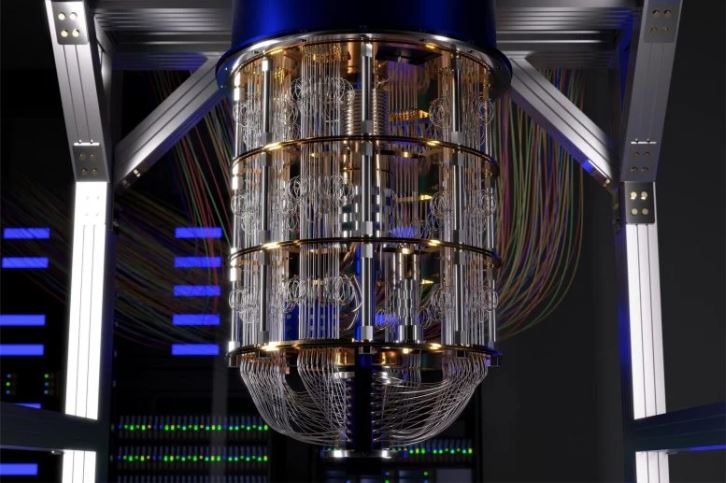
Researchers have demonstrated a quantum computation that appears to exceed the practical capabilities of leading classical simulation methods while also addressing a longstanding problem: how to verify the result.
A quantum computer completed a difficult calculation in about 15 minutes, while leading classical simulation methods would require prohibitive amounts of time. Just as importantly, the experiment included a way to establish confidence that the quantum result was accurate.
IBM and University of Chicago researchers announced the demonstration on July 30, 2026, presenting it as evidence that quantum computing has met the central requirements for quantum advantage. This means completing a task beyond the practical reach of leading classical methods while providing a reliable measure of how faithfully the quantum computation was performed.
In a paper published on arXiv, the researchers describe a new design for encoded quantum circuits that allowed them to pursue both goals at once. The experiment became one of the largest demonstrations of logical quantum computing reported so far. The circuits and results have also been released publicly through the Quantum Advantage Tracker.
Verification has remained the central barrier
Random circuit sampling (RCS) has long served as a benchmark for testing whether quantum computers can outperform classical systems. In this task, a quantum computer produces patterns so complicated that classical computers cannot efficiently recreate them.
The harder the calculation becomes, however, the more difficult it is to confirm that the quantum computer produced the correct output. Eventually, verification itself can become infeasible unless researchers make substantial assumptions about how the machine operates internally.
The IBM and University of Chicago experiment addressed this problem with a more structured alternative to RCS. The researchers proved that the new approach preserves the same standards of computational hardness while allowing errors to be detected as the calculation proceeds.
“Verification remains one of the biggest challenges in firmly establishing experimental quantum advantage,” said Bill Fefferman, Associate Professor at the University of Chicago. “This experiment develops techniques to better characterize the fidelity of hard quantum states under noise, increasing confidence that the quantum computer is solving a computationally hard problem.”
Soumik Ghosh, PhD student in Fefferman’s group at the University of Chicago, added, “Beyond strengthening experimental validation, advances in verification have the potential to unlock practical applications for the next generation of quantum computers.”
Seventy logical qubits suppress errors
The researchers carried out one of the largest known quantum error correction demonstrations, using 70 logical qubits. Logical qubits encode quantum information across multiple physical components to protect calculations from errors caused by noise.
The system completed 2,415 logical two-qubit operations and 468 logical “T gates,” two measures of quantum circuit complexity. Encoding the circuit reduced the effective logical error rate to one tenth of the physical error rate, allowing the computation to maintain high fidelity despite the large number of operations.
“We are now firmly in the quantum advantage era,” said Jay Gambetta, Director of IBM Research and IBM Fellow. “We have demonstrated a quantum computation beyond the practical reach of classical computers that establishes, with statistical confidence, a lower bound on how faithfully it was executed. This milestone gives scientists, developers, and businesses a new foundation for trusting quantum computers as they scale to problems far beyond what we can achieve classically.”
The IBM quantum computer completed the task in approximately 15 minutes. The researchers found that many leading classical simulation methods would face runtimes too long to be practical.
Reliable error correction and confidence in a computation’s output are both necessary for quantum systems to operate at larger scales. By combining a classically difficult calculation with a method for assessing its accuracy, the experiment represents a significant step toward that goal.
Reality Of Islam |
|
A study of
Researchers
MIT enginee
 9:3:43
2018-11-05
9:3:43
2018-11-05
10 benefits of Marriage in Islam
7:5:22
2019-04-08
benefits of reciting surat yunus, hud &
9:45:7
2018-12-24
advantages & disadvantages of divorce
11:35:12
2018-06-10
6:0:51
2018-10-16
1:16:44
2018-05-14
2:33:4
2023-02-15
10:35:40
2022-05-26
8:39:51
2022-09-23
8:25:12
2022-03-09
2:2:13
2022-10-08
6:28:21
2022-12-20
5:41:46
2023-03-18
| LATEST |
 HOME
HOME