الوضع الليلي


 12:22:20
  2026-08-13
  23
23
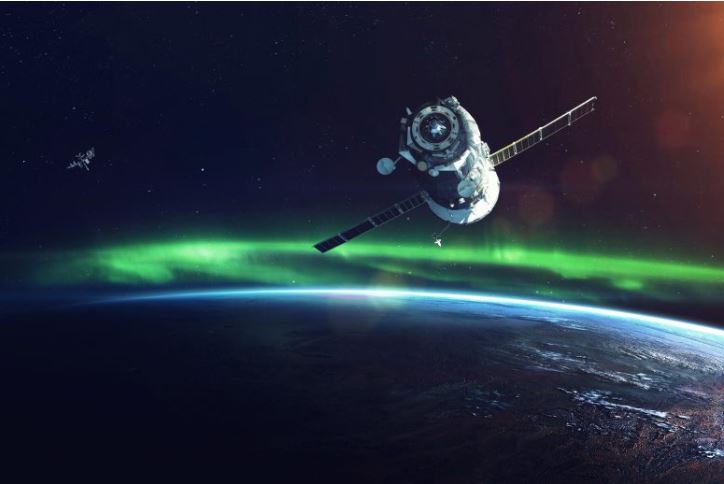
A spacecraft passing through Earth’s radiation belts can record particle behavior that looks random even when the underlying motion is highly organized. New research suggests that the limited resolution of spacecraft measurements can hide fine structures in high-energy particle populations, making predictable movement resemble diffusion.
The International Space Science Institute (ISSI) research team, led by the University of Birmingham and the Czech Academy of Science, reports in Physical Review Research that distinctly structured particle motion can produce observations nearly indistinguishable from patterns usually attributed to random scattering.
That creates a basic problem for researchers trying to understand radiation belts. Two very different physical mechanisms can leave behind essentially the same observational signature.
Radiation belts are doughnut-shaped zones of energetic particles confined by planetary magnetic fields. Earth is not alone in having them. Similar belts occur around Saturn, Jupiter and its moon Ganymede, and recently discovered ultracool brown dwarfs. Understanding how particles move within these regions matters because energetic particles can damage satellites, interfere with communications, and complicate space missions.
As localized groups of energetic particles drift through radiation belt magnetic fields, their initially organized distributions can develop increasingly complicated structures. A spacecraft, however, samples those structures at limited resolution. Fine details can therefore disappear from the measurement, leaving behind a smooth pattern that looks diffusive even when the particles have not undergone diffusion.
Spacecraft can blur predictable motion
Lead author Dr Adnane Osmane, from the University of Helsinki, said: “For more than 60 years, spacecraft observations have often been interpreted using diffusion-based models. Our results show that some observations may also be explained by a fundamentally different process. The key message is not that diffusion does not occur, but that observations alone may not always distinguish between diffusive and non-diffusive transport.
“This has important implications for how we interpret spacecraft data and develop models of hazardous space environments around Earth and other planets. If different physical processes can appear similar in the observations, we need to be careful about how we infer the underlying physics.”
The effect emerges because a spacecraft encounters particles circling the planet at slightly different speeds. Those small differences stretch organized populations into progressively finer structures. Once the spacecraft can no longer resolve that detail, the resulting measurements can resemble the signature expected from particles being randomly scattered by waves, even when such scattering has not occurred.
Co-author Dr Oliver Allanson, from the University of Birmingham, said: “For over 60 years, scientists have interpreted radiation belt observations as evidence that particles spread through space in a random, diffusive way. Our findings challenge these assumptions about how radiation belts work – suggesting we may need to rethink how we model and predict hazardous space environments around Earth, other planets, and even distant brown dwarfs.
“Radiation belts contain highly energetic particles that can damage satellites, disrupt communications, and affect space missions. Our study suggests major implications for how scientists interpret spacecraft data and build models of particle acceleration and transport – challenging researchers to re-evaluate decades of interpretations.”
Lost detail can mimic diffusion
The researchers illustrate the problem with an analogy drawn from art. Jackson Pollock paintings contain dense patterns of lines, splatters, and filaments, while Mark Rothko’s work often consists of broad, smooth fields of color.
The comparison focuses on what happens when fine structure becomes impossible to see. A Pollock painting does not physically become a Rothko when viewed without enough detail. Instead, some of the intricate pattern is simply lost to the observer. In the same way, the filament-like structures produced by organized particle motion remain present even when a spacecraft cannot resolve them, causing complex dynamics to appear smooth and diffusion-like.
Pollock’s Alchemy (1947) and Rothko’s 1949 Untitled (Violet, Black, Orange, Yello on White and Red) provide examples of that contrast.
Corresponding author Dr Mirek Hanzelka, from the Czech Academy of Science, said: “Our research points to an important limitation of many past radiation-belt missions: with a single spacecraft, spatial structure and temporal evolution can be difficult to tell apart, so very different physical processes may leave remarkably similar observational signatures. This makes a strong case for future missions using constellations of scientific satellites that can observe the same particle populations simultaneously at multiple locations.”
Using several scientific satellites at once could therefore help researchers separate changes happening across space from changes unfolding over time, providing a clearer test of which physical process is actually moving particles through a radiation belt.
The study is among the first scientific publications produced by the ISSI International Team collaboration, which brings together specialists in spacecraft observations, theoretical physics, and computational modeling to investigate longstanding problems in space science.
Reality Of Islam |
|

A spacecraf
A crystal s

A sub-nanom
Curiosity h
 9:3:43
2018-11-05
9:3:43
2018-11-05
10 benefits of Marriage in Islam
7:5:22
2019-04-08
benefits of reciting surat yunus, hud &
9:45:7
2018-12-24
advantages & disadvantages of divorce
11:35:12
2018-06-10
6:0:51
2018-10-16
bahlool & the throne of haroun rashid
8:20:35
2018-06-21
4:2:19
2022-10-10
7:6:7
2022-03-21
11:34:48
2022-06-29
7:59:14
2018-06-21
2:13:43
2022-05-27
1:34:8
2022-02-01
5:41:46
2023-03-18
| LATEST |
 HOME
HOME