الوضع الليلي


 10:44:0
  2026-08-02
  861
861
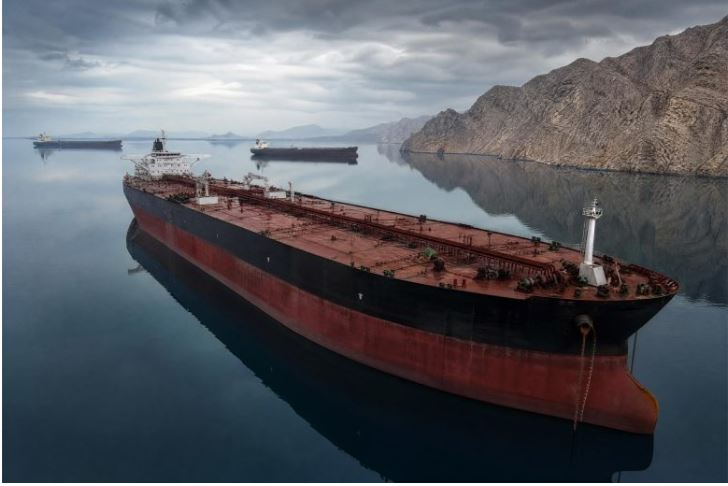
More than 1,500 stranded ships could soon carry an ecological crisis from the Persian/Arabian Gulf to coastlines around the world.
More than 1,500 commercial ships stranded in the Persian/Arabian Gulf may be turning into floating habitats for invasive marine life. As algae, barnacles, mussels, microbes, and other organisms build up on their submerged surfaces, the vessels could carry those species to ports around the world once shipping resumes.
An international team of 24 marine scientists warns that the unprecedented shipping disruption has created the conditions for a global marine bioinvasion “super-spreader” event. The team was led by the University of Maryland Center for Environmental Science (UMCES) and included researchers from the Woods Hole Oceanographic Institution (WHOI).
Their study was recently published in Biological Invasions.
Idle Ships Become Invasion Hubs
Ships routinely transport marine life between oceans, particularly through ballast water and organisms attached to their hulls. However, commercial vessels usually spend only one to three days in port. The ships trapped in the Gulf have remained stationary for at least 40 times longer than a typical visit, giving marine life far more time to settle, reproduce, and spread.
Biofouling can enter a period of rapid growth after about 10 days on a stationary surface. Vessel movement normally helps antifouling coatings suppress this buildup, but those protections become less effective when ships remain still. International guidelines recommend immediate biofouling measures before the next voyage when a vessel has been idle for roughly 18 to 30 days.
A Shipping Disruption Without Precedent
The scale of the current event has no known modern precedent. Earlier shipping disruptions generally immobilized no more than a few hundred vessels. Even the 2021 blockage of the Suez Canal lasted only six days.
This time, more than 1,500 large commercial ships have been stranded in the Persian/Arabian Gulf, with hundreds more anchored in the Gulf of Oman. Many are enormous cargo ships and oil or gas tankers with vast submerged hulls, rudders, pipes, intake systems, and other sheltered spaces where organisms can escape strong currents and antifouling treatments.
The Gulf itself may be an especially effective breeding ground. It is a shallow, semi-enclosed sea with limited water exchange, intense evaporation, high salinity, and extreme heat. Summer surface temperatures can approach 100 degrees Fahrenheit (38 degrees Celsius), creating favorable conditions for many warm-water algae and invertebrates to grow and reproduce.
Gulf Conditions Accelerate Biofouling
Researchers have already documented dozens of nonnative and uncertain-origin species in the region. One recent survey identified 57 such biofouling species on docks, pontoons, and research panels at 12 locations along the western Persian Gulf coast, with the greatest diversity and abundance found inside ports.
The timing of the shipping shutdown may further increase the danger. Many fouling organisms reproduce more rapidly during warmer months, and the mass vessel lay-up has extended through spring and summer.
Nearby ships then provide fresh surfaces for those larvae to colonize. This creates a cycle in which organisms arriving from different regions mix, reproduce, and spread among vessels before being redistributed through international trade.
Invasive Species Ready to Travel
Carolyn Tepolt, a WHOI biologist who studies the evolution and movement of invasive marine species, contributed expertise on how widely distributed biofouling organisms respond to new environments.
“Marine invasive species have profound ecological and economic impacts on coastlines across the globe,” explained Tepolt, “and are extremely difficult, if not impossible, to eradicate once they become established. This disruption to global shipping has many repercussions and has also more quietly created ideal conditions to spread warm-water species to new ports.”
The threat involves more than the visible organisms coating a hull. Biofouling communities can also transport parasites and pathogens capable of infecting native wildlife or commercially valuable species. Such outbreaks can be unpredictable and, in some cases, cause more damage than the invasive species carrying them.
Hidden Genetic and Ecological Risks
Mixing populations from different parts of the world may create another hidden risk. New genetic material can help established invasive populations adapt to unfamiliar conditions, tolerate environmental stress, and expand into new habitats.
Organisms that survive the Gulf’s unusually hot and salty waters may be particularly resilient. If heat-tolerant individuals reach related populations elsewhere, they could increase those populations’ ability to withstand warming seas.
The shipping network connected to the region gives these organisms extraordinary reach. Researchers examined 3,027 vessels that collectively made 248,362 calls at 3,517 ports and anchorages. That connectivity could move Gulf organisms into coastal environments across Europe, Asia, Africa, and beyond.
Preventing a Global Marine Invasion
Cleaning vessels before they leave the Gulf would offer the strongest protection. Removing heavy biofouling would also reduce drag, improve fuel efficiency, and help ships operate normally after months at anchor.
However, treating every vessel before departure may be unrealistic. The region has limited cleaning capacity, and restoring trade and evacuating stranded crews may take priority. Safety concerns and logistical challenges could further restrict underwater work.
The researchers recommend assessing fouling before each vessel departs, predicting its route and first ports of call, and warning destination ports in advance. Even basic observations around the waterline could help authorities estimate whether a ship is carrying extensive marine growth.
The scientists compare the danger to the early stages of an infectious disease outbreak. Ships act as carriers, ports function as connected transmission points, and prolonged anchoring allows potential invaders to accumulate before they are dispersed.
Reality Of Islam |
|

Keeping sil
Two experim
Changing a
Plants are
 9:3:43
2018-11-05
9:3:43
2018-11-05
10 benefits of Marriage in Islam
7:5:22
2019-04-08
benefits of reciting surat yunus, hud &
9:45:7
2018-12-24
advantages & disadvantages of divorce
11:35:12
2018-06-10
6:0:51
2018-10-16
7:59:14
2018-06-21
8:21:9
2018-06-21
10:55:53
2022-06-13
2:5:14
2023-01-28
2:13:43
2022-05-27
7:6:7
2022-03-21
1:16:44
2018-05-14
5:41:46
2023-03-18
| LATEST |
 HOME
HOME