الوضع الليلي


 7:36:54
  2026-01-25
  1609
1609
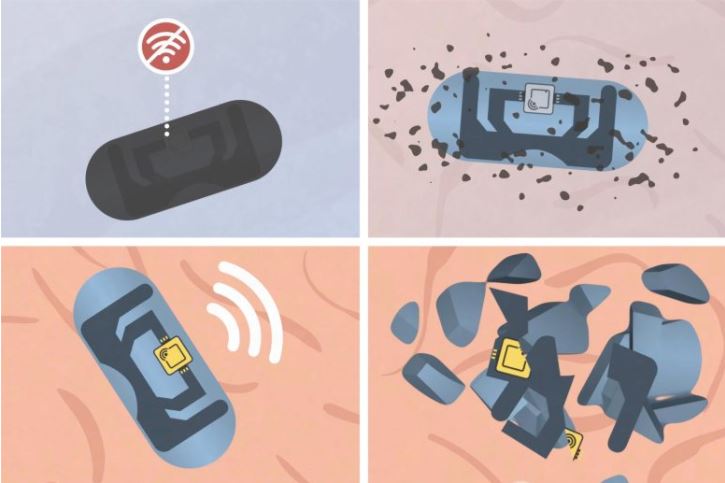
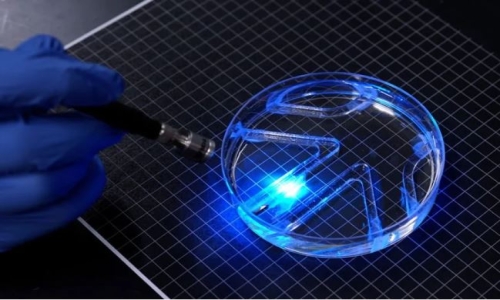
MIT engineers have developed a new type of pill that can verify when it has been swallowed, offering a potential solution to a long-standing problem in medicine. The technology is intended to help patients stay on schedule with critical medications.
The system can be added to standard pill capsules and includes a biodegradable radio frequency antenna. After the pill sends a signal confirming ingestion, most of its electronic parts safely dissolve in the stomach. A very small RF chip then moves through the digestive tract and exits the body naturally.
According to the research team, this approach could be especially helpful for people who must take medication consistently over long periods. Examples include organ transplant recipients who rely on immunosuppressive drugs, as well as patients being treated for infections such as HIV or TB.
“The goal is to make sure that this helps people receive the therapy they need to help maximize their health,” says Giovanni Traverso, an associate professor of mechanical engineering at MIT, a gastroenterologist at Brigham and Women’s Hospital, and an associate member of the Broad Institute of MIT and Harvard.
Traverso is the senior author of the study, which was published January 8 in Nature Communications. Mehmet Girayhan Say, an MIT research scientist, and Sean You, a former MIT postdoc, are the lead authors.
Why Missed Medications Remain a Serious Problem
Not taking medication as prescribed remains a widespread issue. Each year, it contributes to hundreds of thousands of preventable deaths and adds billions of dollars to health care costs.
To address this challenge, Traverso’s lab has previously worked on drug delivery capsules designed to stay in the digestive system for days or even weeks, releasing medication on a set schedule. While effective in some cases, these systems cannot be used with every type of drug.
“We’ve developed systems that can stay in the body for a long time, and we know that those systems can improve adherence, but we also recognize that for certain medications, we can’t change the pill,” Traverso says. “The question becomes: What else can we do to help the person and help their health care providers ensure that they’re receiving the medication?”
How the Communicating Pill Works
In the new study, the researchers focused on a different idea: confirming that a pill has been taken without altering how the medication itself is delivered. Using radio frequency – a type of signal that can be detected outside the body and is considered safe for humans – they designed a capsule that communicates shortly after it is swallowed.
Earlier RF based pill systems used materials that did not easily break down in the body, meaning the entire device had to pass through the digestive tract intact. To reduce the risk of gastrointestinal blockage, the MIT team designed a system that is bioresorbable, allowing most components to safely dissolve.
The antenna that sends the RF signal is made of zinc and embedded in a cellulose particle. These materials were chosen for their strong safety record and compatibility with medical use.
“We chose these materials recognizing their very favorable safety profiles and also environmental compatibility,” Traverso says.
The zinc cellulose antenna is rolled into a compact shape and placed inside the capsule alongside the medication. The capsule’s outer shell is made of gelatin coated with cellulose and either molybdenum or tungsten, which prevents any signal from being transmitted before ingestion.
Once swallowed, the coating dissolves and releases both the drug and the antenna. The antenna receives a signal from an external device and, with the help of a small RF chip, sends back confirmation that the pill has been taken. This process typically occurs within 10 minutes.
The RF chip measures about 400 by 400 micrometers and is an off the shelf component that does not biodegrade. It is designed to be excreted naturally. All other parts of the system break down in the stomach within about a week.
“The components are designed to break down over days using materials with well-established safety profiles, such as zinc and cellulose, which are already widely used in medicine,” Say says. “Our goal is to avoid long-term accumulation while enabling reliable confirmation that a pill was taken, and longer-term safety will continue to be evaluated as the technology moves toward clinical use.”
Testing Results and Future Medical Uses
Tests in animal models showed that the RF signal could be sent from inside the stomach and detected by an external receiver up to 2 feet away. If adapted for people, the researchers envision a wearable device that could receive the signal and forward the information to a patient’s health care providers.
The team plans to continue preclinical research and hopes to begin testing the system in humans. One group that could benefit the most includes patients who have recently undergone organ transplants and must take immunosuppressant drugs to prevent rejection.
“We want to prioritize medications that, when non-adherence is present, could have a really detrimental effect for the individual,” Traverso says.
Other potential beneficiaries include people with recently placed stents who need medication to prevent blockages, patients with chronic infections such as tuberculosis, and individuals with neuropsychiatric conditions that can interfere with consistent medication use.
Reality Of Islam |
|

A study of

Researchers
MIT enginee
 9:3:43
2018-11-05
9:3:43
2018-11-05
10 benefits of Marriage in Islam
7:5:22
2019-04-08
benefits of reciting surat yunus, hud &
9:45:7
2018-12-24
advantages & disadvantages of divorce
11:35:12
2018-06-10
6:0:51
2018-10-16
9:39:36
2022-12-28
4:26:43
2022-02-21
allah will not answer all your prayers
6:56:28
2022-01-01
10:55:53
2022-06-13
11:11:59
2023-02-01
6:14:17
2018-06-21
1:16:44
2018-05-14
5:41:46
2023-03-18
| LATEST |
 HOME
HOME