الوضع الليلي


 12:23:18
  2025-12-16
  1918
1918
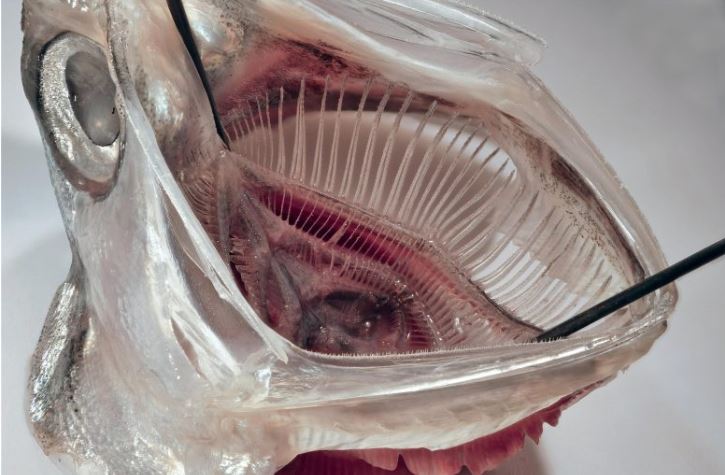
Researchers at the University of Bonn aim to improve the cleanliness of wastewater.
Water released from washing machines is widely recognized as a major source of microplastics, which are tiny plastic particles suspected of posing risks to both human and animal health. Scientists at the University of Bonn have developed a new filter designed to reduce this pollution.
The design takes inspiration from the gill arch system found in fish. Early tests show that the patent-pending filter can remove more than 99 percent of plastic fibers from washing machine wastewater. The research findings have been published in the journal npj Emerging Contaminants.
A single washing machine in a household of four can release as much as 500 grams of microplastics each year, most of it generated as fabrics wear down during washing. As a result, washing machines rank among the most significant contributors of these particles. Once released, microplastics pass into the sewage sludge produced at wastewater treatment plants. Because this sludge is often applied as fertilizer, the plastic fibers can eventually spread onto agricultural land.
This growing problem has prompted manufacturers to search for effective ways to capture microplastics before they reach the environment. “The filter systems available so far, however, have various disadvantages,” explains Dr. Leandra Hamann from the Institute for Organismic Biology at the University of Bonn. “Some of them quickly become clogged, others do not offer adequate filtration.”
Borrowing a filtration blueprint from fish
To find a better solution, Hamann worked with her doctoral supervisor Dr. Alexander Blanke and other colleagues to study biological filtration systems. The researchers turned their attention to fish, which have refined filtering techniques through hundreds of millions of years of evolution.
Certain species, such as mackerel, sardines, and anchovies, feed by filtering water. They swim with their mouths open and trap plankton using their gill arch system. “We took a closer look at the construction of this system and used it as the model for developing a filter that can be used in washing machines,” says Blanke, who is part of the transdisciplinary research areas “Life & Health” and “Sustainable Futures” at the University of Bonn.
During their evolution, these fish have developed a technique similar to cross-flow filtration. Their gill arch system is shaped like a funnel that is widest at the fish’s mouth and tapers towards their gullet. The walls of the funnel are shaped by the branchial arches. These feature comb-like structures, the arches, which are themselves covered in small teeth. This creates a kind of mesh that is stretched by the branchial arches.
Self-cleaning: plankton rolls towards the gullet
“During food intake, the water flows through the permeable funnel wall, is filtered, and the particle-free water is then released back into the environment via the gills,” explains Blanke. “However, the plankton is too big for this; it is held back by the natural sieve structure. Thanks to the funnel shape, it then rolls towards the gullet, where it is collected until the fish swallows, which empties and cleans the system.”
This principle prevents the filter from being blocked – instead of hitting the filter head-on, the fibers roll along it towards the gullet. The process is also highly effective, as it removes almost all of the plankton from the water. Both are aspects that a microplastic filter must also be able to deliver. The researchers thus replicated the gill arch system. In doing so, they varied both the mesh size of the sieve structure and the opening angle of the funnel.
Filter achieves high efficiency
“We have thus found a combination of parameters that enable our filter to separate more than 99 percent of the microplastics out of the water but not become blocked,” says Hamann. To achieve this, the team used not only experiments but also computer simulations. The filter modeled on nature does not contain any elaborate mechanics and should thus be very inexpensive to manufacture.
The microplastics that it filters out of the washing water collect in the filter outlet and are then suctioned away several times a minute. According to the researcher, who has now moved to the University of Alberta in Edmonton, Canada, they could then, for example, be pressed in the machine to remove the remaining water. The plastic pellet created in this manner could then be removed every few dozen washes and disposed of with general waste.
The team from the University of Bonn and the Fraunhofer Institute for Environmental, Safety, and Energy Technology UMSICHT has already applied for a patent for its development in Germany; EU-wide patenting is currently underway. The researchers now hope that manufacturers will further develop the filter and integrate it into future generations of washing machines. This would stem the spread of microplastics from textiles, at least to some extent. And that is also necessary: analyses indicate that the particles may cause serious damage to health. They have already been found in breast milk and in the placenta – and even in the brain.
Reality Of Islam |
|

A study of
Researchers
MIT enginee
 9:3:43
2018-11-05
9:3:43
2018-11-05
10 benefits of Marriage in Islam
7:5:22
2019-04-08
benefits of reciting surat yunus, hud &
9:45:7
2018-12-24
advantages & disadvantages of divorce
11:35:12
2018-06-10
6:0:51
2018-10-16
allah will not answer all your prayers
6:56:28
2022-01-01
7:34:7
2023-02-28
2:11:12
2022-10-15
4:25:57
2023-02-11
9:30:2
2021-11-12
8:19:41
2018-06-21
11:11:59
2023-02-01
5:41:46
2023-03-18
| LATEST |
 HOME
HOME