تاريخ الرياضيات

الاعداد و نظريتها
تاريخ التحليل
تار يخ الجبر
الهندسة و التبلوجي
الرياضيات في الحضارات المختلفة
العربية
اليونانية
البابلية
الصينية
المايا
المصرية
الهندية
الرياضيات المتقطعة
المنطق
اسس الرياضيات
فلسفة الرياضيات
مواضيع عامة في المنطق
الجبر
الجبر الخطي
الجبر المجرد
الجبر البولياني
مواضيع عامة في الجبر
الضبابية
نظرية المجموعات
نظرية الزمر
نظرية الحلقات والحقول
نظرية الاعداد
نظرية الفئات
حساب المتجهات
المتتاليات-المتسلسلات
المصفوفات و نظريتها
المثلثات
الهندسة
الهندسة المستوية
الهندسة غير المستوية
مواضيع عامة في الهندسة
التفاضل و التكامل
المعادلات التفاضلية و التكاملية
معادلات تفاضلية
معادلات تكاملية
مواضيع عامة في المعادلات
التحليل
التحليل العددي
التحليل العقدي
التحليل الدالي
مواضيع عامة في التحليل
التحليل الحقيقي
التبلوجيا
نظرية الالعاب
الاحتمالات و الاحصاء
نظرية التحكم
بحوث العمليات
نظرية الكم
الشفرات
الرياضيات التطبيقية
نظريات ومبرهنات
علماء الرياضيات
500AD
500-1499
1000to1499
1500to1599
1600to1649
1650to1699
1700to1749
1750to1779
1780to1799
1800to1819
1820to1829
1830to1839
1840to1849
1850to1859
1860to1864
1865to1869
1870to1874
1875to1879
1880to1884
1885to1889
1890to1894
1895to1899
1900to1904
1905to1909
1910to1914
1915to1919
1920to1924
1925to1929
1930to1939
1940to the present
علماء الرياضيات
الرياضيات في العلوم الاخرى
بحوث و اطاريح جامعية
هل تعلم
طرائق التدريس
الرياضيات العامة
نظرية البيان

Helena Rasiowa
 المؤلف:
W Bartol
المؤلف:
W Bartol
 المصدر:
E Orlowska and A Skowron, Helena Rasiowa, 1917 - 1994
المصدر:
E Orlowska and A Skowron, Helena Rasiowa, 1917 - 1994
 الجزء والصفحة:
...
الجزء والصفحة:
...
 1-1-2018
 818
818




+
-
20
Died: 9 August 1994 in Warsaw, Poland
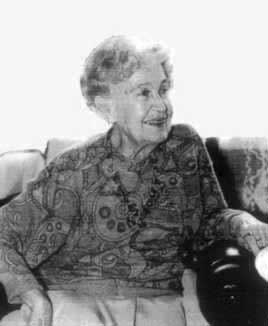
Although Helena Rasiowa was born in Vienna, her parents were Polish. In 1918 Poland regained its status as an independent nation and Rasiowa's parents moved to Warsaw. She was educated there, obtaining a good secondary school education with music lessons taken at a special music school. After completing her school studies she took a course in business management before entering university.
Rasiowa entered the University of Warsaw in 1938 but, after the German invasion of Poland in 1939, the university closed. Rasiowa and her parents moved to Lvov but the Poles were trapped between the Soviets and the Germans and Lvov came under Soviet control. Life there seemed even more difficult than under German occupation, so after a year the family returned to Warsaw.
There was an impressive collection of mathematicians at the University of Warsaw at this time including Borsuk, Lukasiewicz, Mazurkiewicz, Sierpinski, Mostowski and others. They had organised an underground version of the university which was strongly opposed by the Nazi authorities. Borsuk, for example, was imprisoned after the authorities found that he was helping to run the underground university.
In this dangerous situation Rasiowa learnt mathematics, knowing that the penalties for being discovered were extreme. Yet in this environment Rasiowa studied for her Master's Degree under Lukasiewicz's supervision.
When the Soviet forces came close to Warsaw in 1944, the Warsaw Resistance rose up against the weakened German garrison. However German reinforcements arrived and put down resistance. Around 160,000 people died in the Warsaw Uprising of 1944 and the city was left in a state of almost total devastation. Rasiowa's time during the Uprising is described in [1]:-
In 1944 the Warsaw Uprising broke out and in consequence Warsaw was almost completely destroyed, not only because of warfare but also because of the systematic destruction which followed the uprising after it had been squashed down. Rasiowa's thesis burned together with the whole house. She herself survived with her mother in a cellar covered by ruins of the demolished building.
After the war Rasiowa taught in a secondary school while her supervisor Lukasiewicz left Poland after the terrible suffering he had gone through. Mostowski however remembered Rasiowa's impressive work and persuaded her to return to the University of Warsaw to complete a second Master's Thesis under his supervision.
In 1946, having obtained her Master's degree, she was appointed as an assistant at the University of Warsaw and continued to work for her doctorate under Mostowski's supervision. Her thesis, presented in 1950, was on algebra and logic Algebraic treatment of the functional calculus of Lewis and Heyting and these topics would be the main areas of her research throughout her life.
Rasiowa was promoted steadily, reaching the rank of Professor in 1957 and Full Professor in 1967. She led the Foundations of Mathematics Section from 1964 and the Mathematical Logic Section after its creation in 1970.
Her main research was in algebraic logic and the mathematical foundations of computer science. In algebraic logic she continued work by Post, Stone, Tarski and Lukasiewicz [1]:-
... aimed at finding a precise description for the mathematical structure of formalised logical systems.
Of course Rasiowa's work on algebraic logic was in precisely the right area to make her a natural contributor to theoretical computer science. However it is one thing to be in the right area and yet another to have the ability to see the importance of a new subject such as computer science. Her contributions are described in [1]:-
Her contribution to theoretical computer science stems from her conviction that there are deep relations between methods of algebra and logic on the one side and essential problems of foundations of computer science on the other. Among these problems she clearly distinguished inference methods characteristic of computer science and its applications. This conviction of hers had been supported by her results on many-valued and non-classical logics, especially on applications of various generalisations of Post algebras to logics of programs and approximation logics.
In fact in 1984 Rasiowa introduced an important concept of inference where the basic information was incomplete. This led to approximate reasoning and approximate logics which are now central to the study of artificial intelligence.
Rasiowa wrote over 100 papers, books and monographs. She also supervised the doctoral dissertations of more than 20 students. However her contributions were not restricted to research. She helped set up the journal Fundamenta Informaticae which she was editor-in-chief from its setting up in 1977 until her death. In addition to these editorial duties she also was Collecting Editor of Studia Logica from 1974 and, from 1986, an associate editor of the Journal of Approximate Reasoning.
She also played a major role in the mathematical life of Poland. A member of the Polish Mathematical Society, she was its secretary in 1955-57 and its vice-president in 1958/59. She served on the Committee on Mathematics of the Polish Academy of Sciences and chaired various committees of the Polish Ministry of Science and Higher Education. It was partly through her endeavours that the Polish Society for Logic and the Philosophy of Science was set up.
Rasiowa remained active right up to her death, having completed eight chapters of a new monograph Algebraic analysis of non-classical first order logics before entering hospital with her final illness.
Articles:
- W Bartol, E Orlowska and A Skowron, Helena Rasiowa, 1917 - 1994, Bull. European Association for Theoretical Computer Science 62 (1997), 353-366.
 الاكثر قراءة في 1915to1919
 اخر الاخبار
اخبار العتبة العباسية المقدسة

الآخبار الصحية


 قسم الشؤون الفكرية يصدر كتاباً يوثق تاريخ السدانة في العتبة العباسية المقدسة
 "المهمة".. إصدار قصصي يوثّق القصص الفائزة في مسابقة فتوى الدفاع المقدسة للقصة القصيرة
 (نوافذ).. إصدار أدبي يوثق القصص الفائزة في مسابقة الإمام العسكري (عليه السلام)