الوضع الليلي


 2:54:36
  2026-09-16
  11
11
During the Ramadan, 8/December-January 630-31, Ali(a) played a pivotal role in the Conquest of Mecca. After the conquest, Abu Sufyan, acknowledging his kinship with Ali(a), approached him on two occasions, seeking a means to extend the Ḥudaybiyya Peace Treaty. Abu Sufyan’s intention was to enlist Ali’s support in persuading the Prophet (s) to prolong the period of peace, but his efforts proved unfruitful. Ali(a) advised him, saying, “I solemnly swear by Allah, there is no escape from this situation for you. As the prominent leader of Banū Kināna, it is in your best interest to declare peace on your own behalf and return to your homeland ... I cannot envision any alternative course of action for you.” Abu Sufyan followed ʿAlī’s advice and returned to Mecca, openly stating that he did so based on ʿAlī’s counsel. However, upon sharing this decision with his wife Hind, she reproached him, and others began to spread skepticism, claiming that “Alihas cunningly played with you.”
The Prophet (s) made deliberate efforts to conceal his intentions of attacking Mecca from the polytheists. However, the Prophet (s) discovered that Ḥāṭib b. Abī Baltaʿa had attempted to inform the Quraysh about his plans by sending a letter through a female slave. Ḥāṭib’s motivation behind this act was to alleviate pressures on his wife and children who still resided in Mecca. Upon receiving divine revelation regarding Ḥāṭib’s actions, the Prophet (s) immediately summoned Ali(a) and entrusted him with the task of pursuing the female slave. Additionally, he requested al-Zubayr b. al-ʿAwwām to accompany Ali(a) on this mission. Pursuing the woman, Ali(a) and al-Zubayr eventually caught up with her in Dhū l-Ḥulayfa. Initially, the woman denied having any knowledge of the letter’s existence. However, due to the unwavering conviction of Amīr al-Muʾminīn (a) in the truthfulness of the Prophet’s words, he persisted in his pursuit. Eventually, Ali(a) managed to retrieve the letter from her. As a result, the Quraysh remained oblivious to the movements of the Muslim army as they made their way towards Mecca.
En route to Mecca, the Prophet (s) made a stop at a location known as Biʾr Abī ʿInaba, near Medina, where he established a camp. At this point, he entrusted one of the flags of the Muhājirūn to Ali(a). Then, the Prophet (s) issued the order for the army to advance towards Mecca. Upon the Muslims’ entry into Mecca, several companions of the Prophet (s) approached him and informed him that Saʿd b. ʿUbāda, the leader of the Khazraj tribe, had recited a valorous chant, conveying a sense of vengeance, rallying people to engage in the slaughter of the Meccan populace. The Prophet (s) instructed Ali(a) as follows: “Meet Saʿd, take the flag from him, and you be the one who enters Mecca.” Ali(a) conformed to the Prophet’s command.
Abu Sufyan b. al-Ḥārith was the Prophet’s cousin, being the son of his paternal uncle, as well as his breastfeeding (or foster) brother. He was of the same age as the Prophet (s) and had been a close friend prior to the Prophet’s Prophetic mission. However, following the initiation of the Prophetic mission, Abu Sufyan b. al-Ḥārith spared no efforts to persecute the Prophet (s) and Muslims for a span 20 years. During the Conquest of Mecca, he, along with ʿAbbās b. ʿAbd al-Muṭṭalib, approached the Prophet (s) to sincerely express his remorse and repentance. Ali(a) recommended to Abu Sufyan b. al-Ḥārith that he should visit the Prophet (s) and recount the words spoken by Prophet (s) Joseph’s brothers when they sought his forgiveness (the verse, “By Allah, Allah has certainly preferred you over us, and we have indeed been erring “(Q 12:91)), as this would bring satisfaction to the Prophet (s). Thus, the Prophet (s) accepted the repentance of Abu Sufyan b. al-Ḥārith, leading to his conversion to Islam.
When Mecca was conquered on Ramadan 20, 8/January 11, 630, Ali(a) ascended the roof of the Kaaba by respectfully climbing onto the Prophet’s shoulder and then toppled the idols there. At this point, the Prophet (s) recited the following verse “The truth has come, and falsehood has vanished. Indeed falsehood is bound to vanish” (Q 17:81). Amīr al-Muʾminīn (a) recounted the event, stating, “The Prophet (s) guided me to the Kaaba, … and he said, ‘O ʿAlī! Stand upon my shoulder!’ As I obeyed, a sense of surged within me that I could reach the sky. I ascended the Kaaba, and the Prophet (s) commanded, ‘Overturn their idol.’ … I dismantled the foundations of the idol and brought it crashing down.”
Reality Of Islam |
|

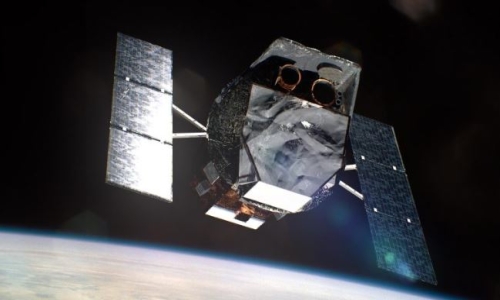
NASA has de
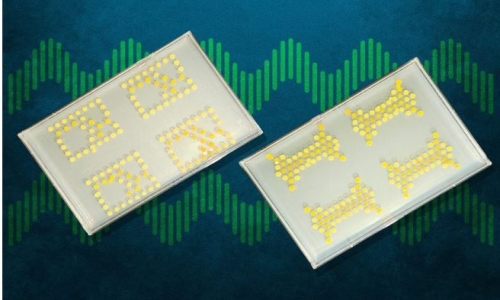
MIT researc

Researchers
 9:3:43
2018-11-05
9:3:43
2018-11-05
10 benefits of Marriage in Islam
7:5:22
2019-04-08
benefits of reciting surat yunus, hud &
9:45:7
2018-12-24
advantages & disadvantages of divorce
11:35:12
2018-06-10
6:0:51
2018-10-16
6:14:17
2018-06-21
1:16:44
2018-05-14
11:11:59
2023-02-01
3:43:50
2022-11-05
8:15:37
2023-02-16
2:42:26
2023-02-02
12:10:56
2022-11-17
5:41:46
2023-03-18
| LATEST |
 HOME
HOME