الوضع الليلي


 11:53:14
  2026-03-17
  1667
1667
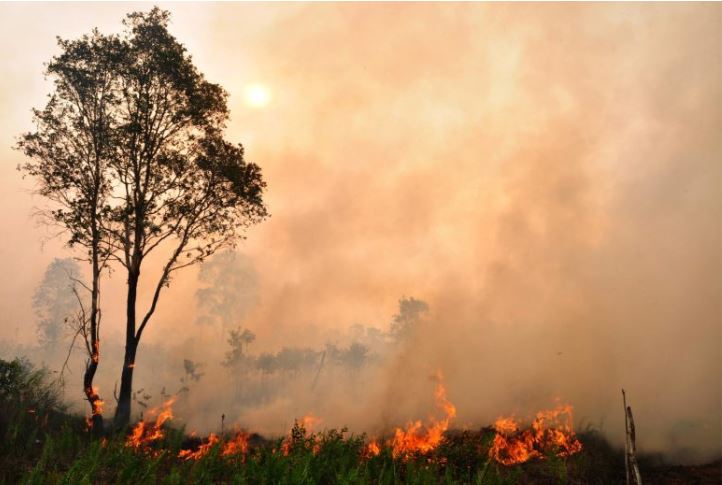
After centuries of decline, tropical peatland fires have exploded in the past 100 years—driven largely by human activity and threatening massive carbon releases.
A new study reports a dramatic rise in wildfires in tropical peatlands during the 20th century. The increase stands out when compared with fire activity over the previous two thousand years.
Peatlands hold enormous amounts of carbon beneath the ground, more than all the carbon stored in the world’s forests combined. When these landscapes burn, however, much of that stored carbon is released into the atmosphere.
Although wildfire activity in tropical regions has increased in recent decades, scientists have known relatively little about how fires have behaved historically in tropical peatlands.
Ancient Charcoal Reveals 2,000 Years of Fire History
To investigate long-term fire patterns, researchers examined charcoal fragments preserved within peat deposits. These deposits were collected from tropical peatlands in Central and South America, Africa, Southeast Asia, and Australasia.
By studying these charcoal records, the team reconstructed wildfire activity dating back more than two millennia.
The evidence shows that fire patterns in peatlands have historically been closely tied to climate conditions, especially the duration and intensity of droughts.
A Thousand-Year Decline Followed by a Sharp Rise
The researchers discovered that wildfire activity in tropical peatlands gradually declined for more than 1,000 years. This trend corresponded with shifts in global temperatures and other natural climate influences.
However, the pattern changed dramatically in the 20th century. The number of fires rose sharply, marking a clear break from the long-term historical trend.
Differences among regions suggest that human activity is largely responsible for the increase.
Human Land Use Linked to Rising Fires
Most of the rise in wildfires occurred in Southeast Asia and parts of Australasia. In these areas, activities such as draining peatlands for agriculture, clearing forests, and converting land for development have left peat soils far more vulnerable to catching fire.
In contrast, peatland regions in South America and Africa that are more remote did not show the same increase in wildfire activity.
Still, lead author Dr. Yuwan Wang warns that these regions may also face greater fire risk in the future as population growth, agricultural expansion, and infrastructure development continue.
Protecting Carbon Rich Ecosystems
“To avoid large carbon emissions that further contribute to global warming, we urgently need to protect these carbon-dense ecosystems,” said Dr. Wang from the University of Exeter.
“A reduction in tropical peatland burning could be achieved through peatland conservation and promoting sustainable resource management and ecosystem restoration, but this requires the collaboration of multiple groups and has to be carried out at a sufficiently large scale.”
Reality Of Islam |
|

Keeping sil
Two experim

Changing a
Plants are
 9:3:43
2018-11-05
9:3:43
2018-11-05
10 benefits of Marriage in Islam
7:5:22
2019-04-08
benefits of reciting surat yunus, hud &
9:45:7
2018-12-24
advantages & disadvantages of divorce
11:35:12
2018-06-10
6:0:51
2018-10-16
9:50:37
2023-02-28
7:6:7
2022-03-21
8:3:0
2018-06-21
8:4:21
2022-01-08
1:38:41
2021-12-08
9:42:16
2022-10-19
7:0:55
2022-05-17
5:41:46
2023-03-18
| LATEST |
 HOME
HOME