الوضع الليلي


 11:38:9
  2025-02-12
  1225
1225
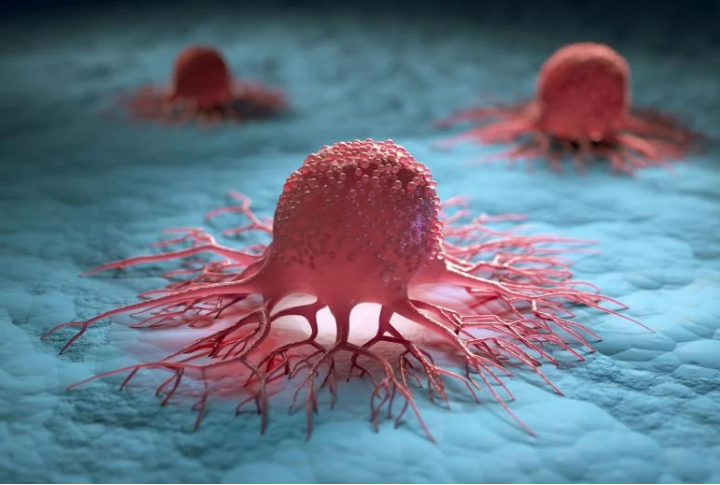
Van Andel Institute researchers discovered that cancer risk may be determined before birth due to distinct epigenetic states formed during early development.
A groundbreaking study by Van Andel Institute scientists suggests that a person’s risk of developing cancer may be influenced before birth.
Published in Nature Cancer, the research identifies two distinct epigenetic states that emerge during early development and are linked to lifetime cancer risk. One state is associated with a lower risk, while the other corresponds to a higher risk.
If cancer occurs in individuals with the lower-risk state, it is more likely to be a liquid tumor (such as leukemia or lymphoma). In contrast, those with the higher-risk state are more likely to develop solid tumors (such as lung or prostate cancer).
“Because most cancers occur later in life and are understood as diseases of mutation, or genetics, there hasn’t been a deep focus on how development might shape cancer risk. Our findings change that,” said J. Andrew Pospisilik, Ph.D., chair of VAI’s Department of Epigenetics and co-corresponding author of the study. “Our identification of these two epigenetically different states open the door to an entirely new world of study into the underpinnings of cancer.”
The Role of Epigenetics in Cancer Development
Cancer risk increases as people age, thanks to an accumulation of DNA damage and other factors. Still, not every abnormal cell goes on to become cancer. In recent years, scientists have identified other influences, such as epigenetic errors, as additional contributors to cancer.
Epigenetics are processes that affect how and when the instructions in DNA are carried out. Problems with epigenetics can derail cellular quality control processes, enabling sick cells to survive and spread.
In their study, Pospisilik and collaborators found that mice with reduced levels of the gene Trim28 can have one of two patterns of epigenetic marks on cancer-related genes, despite being otherwise identical. These patterns are established during development. The strength of the patterns determines which of the two cancer risk states occur.
“Everyone has some level of risk but, when cancer does arise, we tend to think of it just as bad luck,” said Ilaria Panzeri, Ph.D., a research scientist in the Pospisilik Lab and the study’s first and co-corresponding author. “However, bad luck doesn’t fully explain why some people develop cancer and others don’t. Most importantly, bad luck cannot be targeted for treatment. Epigenetics, on the other hand, can be targeted. Our findings show that cancer’s roots may start during the sensitive period of development, offering a new perspective to study the disease and potential new options for diagnosis and treatment.”
The team found evidence of the two epigenetic states throughout tissues in the body, which suggests that developmental epigenetic risk may be common across cancers. In the future, they plan to explore the effects of these two states in individual cancer types.
Reality Of Islam |
|

Modern comp

With im

A Sahara De
 9:3:43
2018-11-05
9:3:43
2018-11-05
10 benefits of Marriage in Islam
7:5:22
2019-04-08
benefits of reciting surat yunus, hud &
9:45:7
2018-12-24
advantages & disadvantages of divorce
11:35:12
2018-06-10
6:0:51
2018-10-16
a hero waters thirsty wild animals
9:4:9
2022-01-06
6:14:3
2023-01-18
1:34:8
2022-02-01
7:34:7
2023-02-28
2:33:4
2023-02-15
2:42:26
2023-02-02
the happy life of mankind requirement
6:36:36
2022-01-25
5:41:46
2023-03-18
| LATEST |
 HOME
HOME