الوضع الليلي


 11:33:45
  2025-02-12
  1796
1796
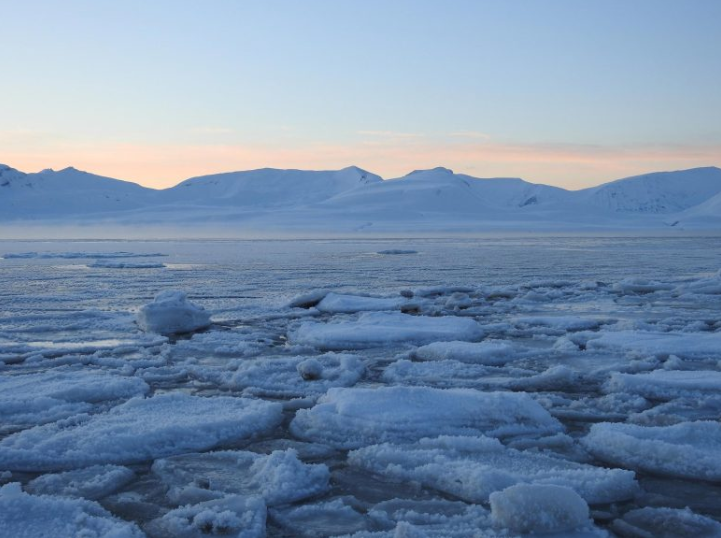
A new paper reveals what lies ahead for the fastest-warming region on Earth.
In 2024, the global average air temperature exceeded 1.5 degrees Celsius above pre-industrial levels for the first time, contributing to extreme weather events such as record-breaking rainfall and flooding in the Sahara Desert, as well as intense summer heat waves worldwide. However, global warming is expected to continue beyond this threshold. Based on current national pledges to limit greenhouse gas emissions, global temperatures are projected to rise by 2.7 degrees Celsius above pre-industrial levels by the end of the century. This level of warming would significantly alter the Arctic, the fastest-warming region on Earth.
A new review paper, published in Science on February 7, 2025, examines these changes and their far-reaching consequences. The study is led by Julienne Stroeve, a senior research scientist at the National Snow and Ice Data Center (NSIDC) and a professor at the Centre for Earth Observation Science at the University of Manitoba.
“The Arctic is warming at four times the rate of the rest of the planet,” said Stroeve. “At 2.7 degrees Celsius of global warming, we will see more extreme and cascading impacts in this region than elsewhere, including sea-ice-free Arctic summers, accelerated melting of the Greenland Ice Sheet, widespread permafrost loss, and more extreme air temperatures. These changes will devastate infrastructure, ecosystems, vulnerable communities, and wildlife.”
Projected Arctic Changes at 2.7°C Warming
In the review paper, the authors used the Sixth Assessment Report of the United Nations Intergovernmental panel on Climate Change as a starting point. They updated knowledge from the report about three specific areas of the Arctic environment, including sea ice, the Greenland Ice Sheet, and permafrost, focusing on existing studies that show consensus about the changes that will take place in the region.
Under 2.7 degrees Celsius of warming, the Arctic region is likely to experience the following effects:
“Our paper shows that, already today, mankind has the power to wipe out entire landscapes from the surface of our planet,” said Dirk Notz, professor for polar research at the University of Hamburg and co-author of the study. “It’d be amazing if we could become more aware of this power and the responsibility that goes with it, as the future of the Arctic truly lies in our hands.”
Reality Of Islam |
|

Changing a
Plants are

After spend
A study of
 9:3:43
2018-11-05
9:3:43
2018-11-05
10 benefits of Marriage in Islam
7:5:22
2019-04-08
benefits of reciting surat yunus, hud &
9:45:7
2018-12-24
advantages & disadvantages of divorce
11:35:12
2018-06-10
6:0:51
2018-10-16
7:26:19
2022-04-08
7:34:7
2023-02-28
3:18:29
2022-12-24
2:33:4
2023-02-15
2:2:13
2022-10-08
4:26:43
2022-02-21
8:3:0
2018-06-21
5:41:46
2023-03-18
| LATEST |
 HOME
HOME