الوضع الليلي


 1:16:24
  2024-08-06
  2049
2049
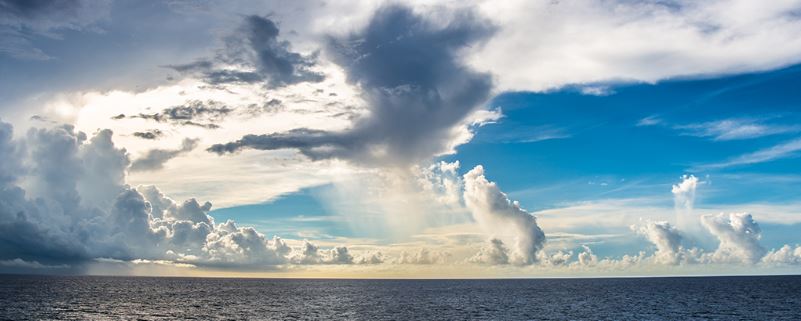
The El Niño-Southern Oscillation is an unpredictable shift in winds and currents over tropical Pacific waters that significantly affects climates far and wide across the planet.
It now appears it might have a secret sibling. Dubbed the 'new El Niño', the Southern Hemisphere Circumpolar Wavenumber-4 Pattern emerges further south in the southwestern subtropical Pacific towards Australia and New Zealand. While the region that controls these weather shifts is relatively small, it can also trigger climate shifts across the whole of the Southern Hemisphere.
The international team of researchers who made the discovery say that it's going to be vital in understanding climate change in the years ahead.
"This discovery is like finding a new switch in Earth's climate," says meteorologist Balaji Senapati from the University of Reading in the UK.
"It shows that a relatively small area of the ocean can have wide-reaching effects on global weather and climate patterns."
By combining real world observations and advanced climate modeling covering 300 years, the researchers were able to track what they labeled a W4 pattern, repeating annually across the Southern Hemisphere with four alternating regions of warm and cool air.
The team also found that the smaller region near Australia and New Zealand works as a control lever for W4, with ocean temperature changes in this part of the world in turn influencing atmospheric temperatures in the southern sub-tropics and mid latitudes.
As wind patterns change they alter the depth of the upper layer of warmer water in the ocean – which then feeds back to temperature changes in the atmosphere.
Westerly winds can then carry the warmed or cooled air around the globe in an anomalous W4 climate pattern. According to the research, these climate patterns are distinct from others that we know about, including El Niño and its sister phenomenon. La Niña.
"Understanding this new weather system could greatly improve weather forecasting and climate prediction, especially in the Southern Hemisphere," says Senapati.
"It might help explain climate changes that were previously mysterious and could improve our ability to predict extreme weather and climate events."
It seems these weather patterns get going during summer in the Southern Hemisphere, between December and February – and while the system has only just been identified, the researchers think it's been influencing the world's weather for a long time.
What the team didn't get into in this study is how changes in this new El Niño might play out. However, we already know the Southern Hemisphere is drying out, warming up, and getting stormier, and this weather pattern should help explain why.
"A better understanding of the linkage between the Southern Hemisphere climate variability and the southwestern subtropical Pacific is required," write the researchers in their published paper.
Reality Of Islam |
|

Keeping sil
Two experim
Changing a
Plants are
 9:3:43
2018-11-05
9:3:43
2018-11-05
10 benefits of Marriage in Islam
7:5:22
2019-04-08
benefits of reciting surat yunus, hud &
9:45:7
2018-12-24
advantages & disadvantages of divorce
11:35:12
2018-06-10
6:0:51
2018-10-16
7:34:7
2023-02-28
12:47:1
2022-12-20
8:30:23
2022-03-03
10:43:56
2022-06-22
11:11:59
2023-02-01
5:58:12
2021-12-18
9:30:2
2021-11-12
5:41:46
2023-03-18
| LATEST |
 HOME
HOME