الوضع الليلي


 10:37:12
  2024-01-13
  1818
1818

You don't have to be an expert volcanologist to figure out that drilling straight into the side of a volcano is a rather ambitious idea.
But that's exactly what a team of researchers are planning to do in the next couple of years in Iceland in what would be a scientific first.
The aim is to rapidly advance our understanding of how magma behaves underground, and what prompts volcanoes to erupt when they do. At the same time, the team is hopeful of being able to tap into a near-unlimited source of clean energy.
This controlled breaching of a magma chamber is being undertaken by the Krafla Magma Testbed (KMT) organization – named after the Krafla volcanic caldera in the northeast of Iceland.
"It is to be science infrastructure analogous to a telescope array, polar station, particle accelerator, or seabed observatory where a previously little-known environment can be explored and understood," explained members of the KMT team in a 2018 paper.
The work is building on previous efforts at the start of the century to drill close to one of the Krafla magma chambers. On that occasion, the intent was only to get near to the chamber to explore geothermal energy options.
However, the chamber wasn't as deep down as expected: the project accidentally broke through into the magma vault, which eventually prevented any further attempts to drill, as the overwhelming heat (450°C or 842°F) destroyed the well.
It did, however, confirm drilling into a magma chamber doesn't cause the volcano to erupt.
Now, scientists are trying again. Magma chambers are notoriously hard to locate, so the Krafla site offers an unusual opportunity to get at one – and to then be able to conduct experiments that have never previously been possible.
"Being able to go into the crust and sample magma would give us huge knowledge," KMT's Hjalti Páll Ingólfsson told Graham Lawton at New Scientist. "We hope to be able to have a direct measurement at least of temperature, which has never been done before."
A lot of challenges lie ahead of course, including the development of drills and sensors capable of surviving the intense heat, pressure, and acidity of these chambers. If all goes to plan, drilling will get underway in 2026.
Over the years, more and more research is planned. The nature of the Krafla site means its magma chamber could give us new information about how continental crust is formed, and help experts in predicting when eruptions will happen at similar volcanoes.
Then there's the clean energy angle. Drilling on a second well is expected to start in 2028, with plans to tap into ultra-hot water stored at ultra-high pressures to drive turbines, all powered by what nature has already given us.
"There are endless opportunities," Ingólfsson told Lawton. "The only thing we need to do is to learn how to tame this monster."
Reality Of Islam |
|
For more th
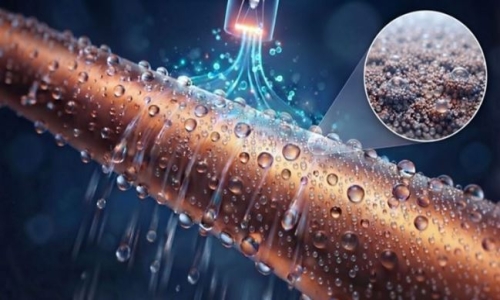
A new polym
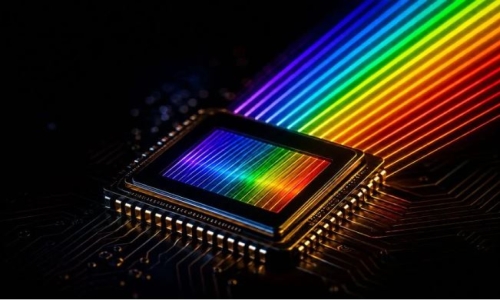
A tiny chip
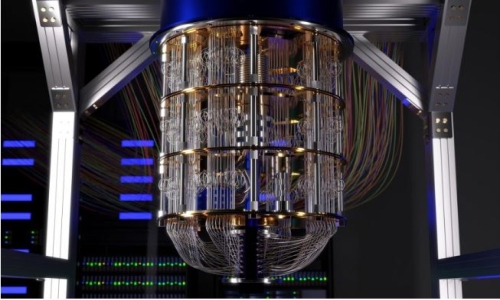
Researchers
 9:3:43
2018-11-05
9:3:43
2018-11-05
10 benefits of Marriage in Islam
7:5:22
2019-04-08
benefits of reciting surat yunus, hud &
9:45:7
2018-12-24
advantages & disadvantages of divorce
11:35:12
2018-06-10
6:0:51
2018-10-16
7:26:19
2022-04-08
2:34:48
2022-01-18
1:38:41
2021-12-08
8:4:21
2022-01-08
8:39:51
2022-09-23
3:18:29
2022-12-24
11:11:59
2023-02-01
5:41:46
2023-03-18
| LATEST |
 HOME
HOME