الوضع الليلي


 4:12:0
  2023-10-07
  2071
2071
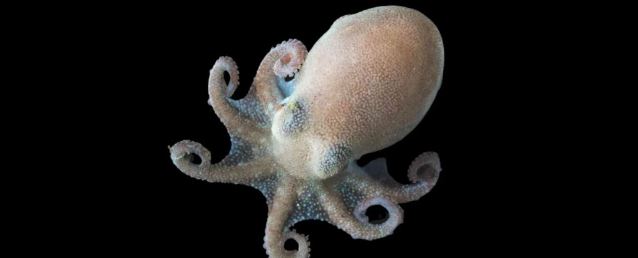
Antarctic octopuses live in the coldest waters in the world, where temperatures peak at 10°C (50°F) and frequently drop to nearly -2°C (28°F). How these 'cold- blooded' creatures survive such extremes has been something of a mystery.
Oddball octopuses of the genus Pareledone were recently found to use their three hearts to pump a special type of blue blood around their bodies, supplying oxygen to tissues even in super-cold environments like Antarctica. Similar to many other species that live in permanently frigid water, these octopuses also appear to have 'cold-adapted' enzymes, according to an investigation led by the Marine Biological Laboratory in the US.
Such proteins play a key role in a slew of biochemical reactions. In Antarctic creatures, their unique flexibility allows them to function even at lower
temperatures, whereas enzymes from more temperate octopuses slow down 25 percent in the face of similar extremes.
Soluble enzymes - like those that break down food in our gut - can adapt more easily to different temperatures because of the particular reactions they're involved in. But not all enzymes in the body can afford to be this flexible. Some are smooshed into cell membranes, where their 'working conditions' are far more rigid.
These protein 'pumps' or channels carry important ions into and out of the cell, creating gradients that allow for the propagation of energy.
So how do these particular enzymes cope with Antarctica's cold?
Researchers from the Marine Biological Laboratory, University of Puerto Rico, and the US National Institute of Neurological Disorders and Stroke decided to dig into the details.
They created two models: one based on the sodium-potassium pump enzyme found in Antarctic octopuses (Pareledone) and the other based on the same pump found in a temperate species called the two-spot octopus (Octopus bimaculatus).
The authors picked this enzyme because it exports three sodium ions and imports two potassium ions at the cost of one molecule of adenosine triphosphate (ATP), which is the source of a cell's energy. This exchange is essential for cell excitability and the transport of solutes.
"Because of its central importance, the [sodium-potassium pump] should be under strong selection to operate efficiently in different thermal environments," the authors explain.
Just as the team suspected, the Antarctic pump performed better at −1.8 °C than the temperate pump. It was less intrinsically sensitive to the cold.
The building blocks, or amino acids, that form the Antarctic pump differed slightly from those in the temperate octopus species.
In total, the researchers counted 12 locations on the Antarctic amino acid sequence where a mutation seemed to confer resistance to cold.
By adding in these mutations one at a time to a model, the researchers figured out that three mutations in particular worked together to provide most of the pump's cold resistance.
What's more, most of these mutations were positioned at the interface between the pump and the rest of the cell membrane.
One mutation, at the location L314V, had the greatest effect of the lot. Without it, the pump no longer worked at near-freezing temperatures.
Researchers will need to study the details behind this mutation further, but it could be that this different amino acid at this specific location somehow gives the pump extra wiggle room within the cell membrane.
Biophysicist Miguel Holmgren from the US National Institute of Neurological Disorders and Stroke was not surprised that the interface between the protein and the membrane would be a site for such adaptations
"It makes sense to us," he said.
The authors now hope to conduct further experiments on how the protein pumps of Antarctica's octopuses keep cells firing in frigid temperatures.
Reality Of Islam |
|

For more th
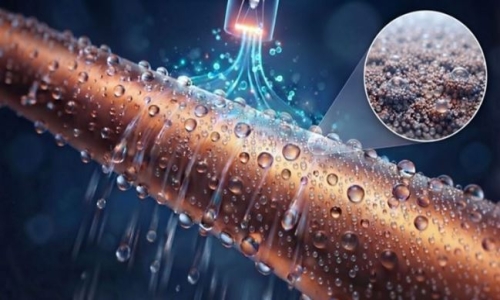
A new polym

A tiny chip
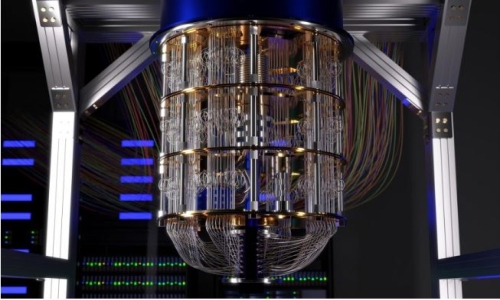
Researchers
 9:3:43
2018-11-05
9:3:43
2018-11-05
10 benefits of Marriage in Islam
7:5:22
2019-04-08
benefits of reciting surat yunus, hud &
9:45:7
2018-12-24
advantages & disadvantages of divorce
11:35:12
2018-06-10
6:0:51
2018-10-16
8:25:12
2022-03-09
9:42:16
2022-10-19
7:34:7
2023-02-28
2:42:26
2023-02-02
2:5:14
2023-01-28
al-hussain (peace be upon him)
10:18:1
2022-09-21
8:19:41
2018-06-21
5:41:46
2023-03-18
| LATEST |
 HOME
HOME