الوضع الليلي


 3:55:2
  2023-09-10
  2399
2399
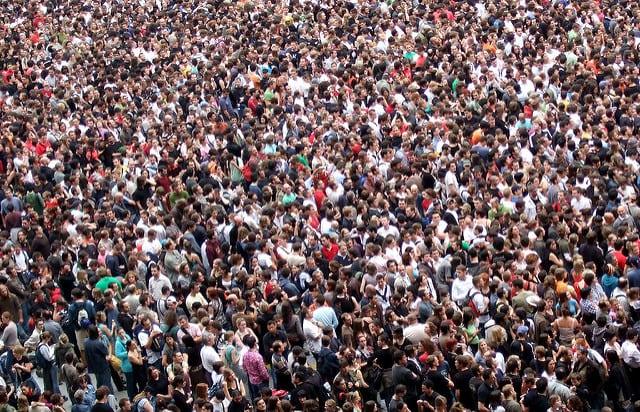
Conversations about overpopulation can quickly become controversial because they beg the question: Who exactly is the cause of the problem and what, if anything, should be done about it? Many population experts worry discussions around overpopulation will be abused by small-minded people to suggest some are the “right people” to be on the planet (like themselves), and some people are “the wrong people” (usually people in poverty, people of color, foreigners, and so on—you get the drift). But there are no “right” or “wrong” people on the planet, and discussing the problems of global overpopulation can never be an excuse, or in any way provide a platform, for having that type of conversation.
Each human being has a legitimate claim on a sufficient and fair amount of Earth’s resources. But with a population approaching 8 billion, even if everyone adopted a relatively low material standard of living like the one currently found in Papua New Guinea, it would still push Earth to its ecological breaking point. Unfortunately, the “average person” on Earth consumes at a rate over 50% above a sustainable level. Incredibly, the average person in the United States uses almost five times more than the sustainable yield of the planet.
When we use the term “overpopulation,” we specifically mean a situation in which the Earth cannot regenerate the resources used by the world’s population each year. Experts say this has been the case every year since 1970, with each successive year becoming more and more damaging. To help temper this wildly unsustainable situation, we need to understand what’s contributing to overpopulation and overconsumption and how these trends are affecting everything from climate change to sociopolitical unrest.
THE CAUSES OF OVERPOPULATION
Today the Earth is home to more than 7.8 billion people. By 2100 the population is on track to hit 10.8 billion, according to the United Nations - and that's assuming steady fertility declines in many countries. Interestingly, if extra progress is made in women's reproductive self-determination, and fertility falls more than the United Nations assumes is likely, the population in 2100 might be a relatively smaller 7.3 billion.
For now, the world's population is still increasing in huge annual increments (about 80 million per year), and our supply of vital non-renewable resources are being exhausted. Many factors contribute to these unsustainable trends, including falling mortality rates, underutilized contraception, and a lack of education for girls.
FALLING MORTALITY RATE
The primary (and perhaps most obvious) cause of population growth is an imbalance between births and deaths. The infant mortality rate has decreased globally, with 4.1 million infant deaths in 2017 compared to 8.8 million in 1990, according to the World Health Organization (WHO). This is welcome public health news, of course.
At the same time, lifespans are increasing around the world. Those of us who are alive today will likely live much longer than most of our ancestors. Global average life expectancy has more than doubled since 1900, thanks to advancements in medicine, technology, and general hygiene. Falling mortality rates are certainly nothing to complain about either, but widespread longevity does contribute to the mathematics of increasing population numbers.
Reality Of Islam |
|

After spend

A study of

Researchers
 9:3:43
2018-11-05
9:3:43
2018-11-05
10 benefits of Marriage in Islam
7:5:22
2019-04-08
benefits of reciting surat yunus, hud &
9:45:7
2018-12-24
advantages & disadvantages of divorce
11:35:12
2018-06-10
6:0:51
2018-10-16
6:14:3
2023-01-18
9:39:36
2022-12-28
11:34:48
2022-06-29
1:34:8
2022-02-01
2:33:4
2023-02-15
12:47:1
2022-12-20
7:26:19
2022-04-08
5:41:46
2023-03-18
| LATEST |
 HOME
HOME