الوضع الليلي


 3:31:41
  2023-08-29
  1667
1667

This Incredible Tiny Robot Can Locate and Capture Individual Cells
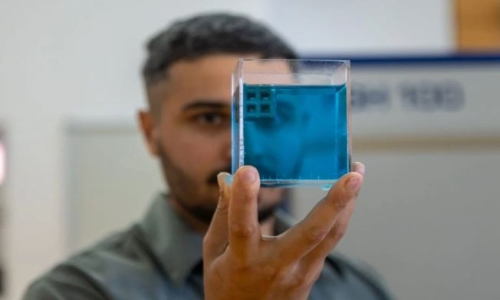
The latest bit of brilliance from the field of robotics is a tiny micro-motor that can identify, trap, and transport individual cells. It's a serious feat of engineering that could find uses from medicine to air purification.
Importantly, both electric and magnetic fields can control the machine – and the latter will be vital if the microscopic robot is eventually going to be deployed in the human body, which is what its inventors intend.
The bot ranges from 5 to 27 micrometers across and is made from a specially engineered polystyrene sphere coated with the conductive materials chromium, nickel, and gold.
"Developing the micro-robot's ability to move autonomously was inspired by biological micro-swimmers, such as bacteria and sperm cells," says mechanical engineer Gilad Yossifon from the University of Tel Aviv in Israel. "This is an innovative area of research that is developing rapidly, with a wide variety of uses."
This micro-motor has an impressive list of capabilities. It can move from cell to cell, identify different types of cells, recognize whether cells are healthy or dying, transport cells, and apply drugs or a specific gene to a cell.
The researchers used the bot to capture single blood cells, single cancer cells, and a single bacterium. It hasn't yet been tested inside the human body, but that's one of the areas where it can potentially be effective.
Thanks to the way it natively senses cell status through electrical signals, the micro-motor might eventually be able to help with certain cancer treatments by identifying cells that are killing themselves inside the body.
"Our new development significantly advances the technology in two main aspects: hybrid propulsion and navigation by two different mechanisms, electric and magnetic," says Yossifon.
"In addition, the micro-robot has an improved ability to identify and capture a single cell, without the need for tagging, for local testing or retrieval and transport to an external instrument."
One of the areas that this new robot has a lot of potential is in single-cell analysis. As the name suggests, it's where scientists look at the behavior and properties of cells in isolation rather than in a larger biological organism.
You can imagine groups of these micro-motors delivering drugs inside the body or cleaning up pollutants in an environment; there's plenty of promise here.
The new invention might also be helpful when it comes to liquid biopsies, too, the researchers say, those situations where blood or another type of bodily fluid needs to be sampled and analyzed.
"This research was carried out on biological samples in the laboratory for in-vitro assays," says Yossifon, "but the intention is to develop in the future micro-robots that will also work inside the body – for example, as effective drug carriers that can be precisely guided to the target."
Reality Of Islam |
|

After spend
A study of
Researchers
 9:3:43
2018-11-05
9:3:43
2018-11-05
10 benefits of Marriage in Islam
7:5:22
2019-04-08
benefits of reciting surat yunus, hud &
9:45:7
2018-12-24
advantages & disadvantages of divorce
11:35:12
2018-06-10
6:0:51
2018-10-16
7:34:7
2023-02-28
1:16:44
2018-05-14
12:47:1
2022-12-20
11:34:48
2022-06-29
6:28:21
2022-12-20
1:34:8
2022-02-01
5:58:12
2021-12-18
5:41:46
2023-03-18
| LATEST |
 HOME
HOME