الوضع الليلي


 7:50:32
  2023-09-19
  2030
2030
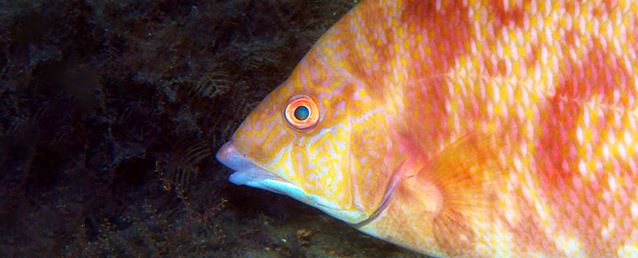
As if changing color isn't impressive enough, hogfish can 'see' with their skin too. A new US study suggests this bizarre form of visualization is how the reef fish detect their own colors.
"They appear to be watching their own color change," says biologist Lori Schweikert, now at the University of North Carolina. "If you didn't have a mirror, and you couldn't bend your neck, how would you know if you're dressed appropriately?"
For us, color choice is a matter of fashion. But for the hogfish (Lachnolsimas maximus) living under the constant threat of predation from any angle, getting your shade to match your background is literally a matter of life or death.
The fish transition from female to male around three years of age, when each then gathers a harem of young females to mate with and protect. The fish's skin-color-changing talents can come in handy here as well, wooing mates and threatening rivals, Schweikert explains.
To do this the hogfish rely on pigment filled cells called chromatophores, like other animals that use dynamic skin color from octopus to chameleons.
Pigments within these cells huddle close together to allow the white flesh below to shine through. But as various combinations of the red, yellow or black pigments spread out, the surface level cells transform in hue and shade.
Research on other fish, the Nile tilapia (Oreochromis niloticus), found light sensitive molecules called ospins can influence chromatophore color. So Schweikert and team examined hogfish skin samples using a protein labeling technique and transmission electron microscope imaging.
They tracked down the opsin molecules to cells directly beneath the fish's chromatophores. These newly discovered opsin-producing cells are most sensitive to the short, blue wavelengths that can pass through the chromatophores. What's more, the light levels vary the amount of opsin released.
The opsins then likely regulate the pigment level in the chromatophores in turn, as seen in the Nile tilapia, each cell regulating the other in response to environmental cues. Exactly how the opsins influence the chromatophores is still to be determined.
"The animals can literally take a photo of their own skin from the inside," explains Duke University marine biologist Sönke Johnsen. "In a way they can tell the animal what its skin looks like, since it can't really bend over to look."
Having independent skin vision likely requires much less demanding processing than relying on eyes for the same thing, as it only acts as a light-detection mechanism rather than forming actual complicated brain visuals that would then need to be assessed.
"Sensory feedback is one of the tricks that technology is still trying to figure out," says Johnsen. "This study is a nice dissection of a new sensory feedback system."
Reality Of Islam |
|

Two experim

Changing a

Plants are

After spend
 9:3:43
2018-11-05
9:3:43
2018-11-05
10 benefits of Marriage in Islam
7:5:22
2019-04-08
benefits of reciting surat yunus, hud &
9:45:7
2018-12-24
advantages & disadvantages of divorce
11:35:12
2018-06-10
6:0:51
2018-10-16
1:34:8
2022-02-01
9:30:2
2021-11-12
11:2:27
2022-10-06
12:10:56
2022-11-17
4:2:19
2022-10-10
10:35:40
2022-05-26
8:15:37
2023-02-16
5:41:46
2023-03-18
| LATEST |
 HOME
HOME