الوضع الليلي


 4:42:45
  2019-08-07
  1614
1614

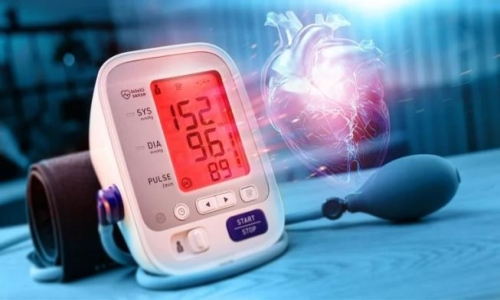
In good news for people who have blood pressure (BP) problems, monitoring BP might one day become as easy as taking a video selfie.
Researchers have tested a technology called transdermal optical imaging that measures blood pressure by detecting blood flow changes in smartphone-captured facial videos.
"This study shows that facial video can contain some information about systolic blood pressure," said researcher Ramakrishna Mukkamala, Professor at the Michigan State University.
Ambient light penetrates the skin's outer layer allowing digital optical sensors in smartphones to visualise and extract blood flow patterns, which transdermal optical imaging models can use to predict blood pressure.
"High blood pressure is a major contributor to cardiovascular disease -- a leading cause of death and disability. To manage and prevent it, regular monitoring of one's blood pressure is essential," said study lead author Kang Lee, Professor at the University of Toronto in Canada.
"Cuff-based blood pressure measuring devices, while highly accurate, are inconvenient and uncomfortable. Users tend not to follow American Heart Association guidelines and device manufacturers' suggestion to take multiple measurements each time," Lee said.
For the study, published in the journal Circulation: Cardiovascular Imaging, the research team measured the blood flow of 1,328 Canadian and Chinese adults by capturing two-minute videos using an iPhone equipped with transdermal optical imaging software.
The researchers compared systolic, diastolic and pulse pressure measurements captured from smartphone videos to blood pressure readings using a traditional cuff-based continuous blood pressure measurement device.
The researchers used the data to teach the technology how to accurately determine blood pressure and pulse from facial blood flow patterns.
They found that on average, transdermal optical imaging predicted systolic blood pressure with nearly 95 percent accuracy and diastolic blood pressure with pulse pressure at nearly 96 percent accuracy.
The technology's high accuracy is within international standards for devices used to measure blood pressure, according to Lee.
Researchers videoed faces in a well-controlled environment with fixed lighting, so it is unclear whether the technology can accurately measure blood pressure in less controlled environments, including homes.
Also, while the study participants had a variety of skin tones, the sample lacked subjects with either extremely dark or fair skin.
Reality Of Islam |
|

After spend
A study of
Researchers
 9:3:43
2018-11-05
9:3:43
2018-11-05
10 benefits of Marriage in Islam
7:5:22
2019-04-08
benefits of reciting surat yunus, hud &
9:45:7
2018-12-24
advantages & disadvantages of divorce
11:35:12
2018-06-10
6:0:51
2018-10-16
8:15:37
2023-02-16
11:34:48
2022-06-29
7:45:39
2018-06-21
bahlool & the throne of haroun rashid
8:20:35
2018-06-21
12:10:56
2022-11-17
9:50:37
2023-02-28
1:34:8
2022-02-01
5:41:46
2023-03-18
| LATEST |
 HOME
HOME